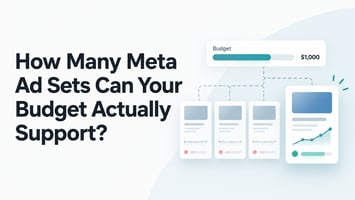

If you've opened Meta Ads Manager and seen one ad receiving nearly all your budget while the others...
The Viral Marketing Company™
Facebook Ads for Med Spas: When Botox Specials Pay Off
You open Meta's Ad Library, type in the name of a med spa across town, and there it is: $10-a-unit Botox every Tuesday, walk-ins welcome, and the ad has been running since July. Maybe they're racing to the bottom. Maybe they know their numbers better than you'd expect.
The ad alone can't tell you which. Facebook ads for med spas work when the offer brings in people who already want the treatment, those people show up, and the patients you keep are worth more over time than you spent to get them. A Botox special can do that. So can a free consultation. Judge either one by cost per attended appointment and what those patients spend over the following months, not by cost per lead.
Should med spas advertise Botox specials, discounts, or consultations?
I personally know John Castañeda Rodriguez, CEO of Ethos MedSpa Consulting. I've managed Meta ads for Ethos MedSpa in the past, and John has told me they continue to lean heavily on Botox and other injectables in their advertising to bring new patients through the door. From our conversations, I know that approach has worked very well for them. I'm not currently managing their campaigns and haven't seen their exact current numbers, so I can't tell you their current cost per patient or return on ad spend. What anyone can see is what they're running.
When I checked Meta's Ad Library on November 9, 2026, Ethos MedSpa had active ads for:
- Botox Tuesdays in Chicago and Chesterfield: drop in for $10 per unit of Botox or $8 per unit of Jeuveau, no appointment needed
- A new-client Dysport offer, 20 units for $159
- A limited-time Dysport offer at $4 per unit
- $100 off lip filler
Several of those ads started running in July, August or September. That looks like a recurring acquisition strategy, not a one-time promotion, and it's built around a treatment people already know they want.
That last part matters. Someone who's been getting Botox for three years doesn't need an education campaign. She's comparing price, convenience and whether she trusts the injector. A clear price and a "walk in on Tuesday" invitation answers most of what she's asking. And because neurotoxin results wear off, a patient who has a good experience has a reason to come back.
Here's how I'd think about the three common approaches:
- A low-priced, familiar treatment (Botox, Dysport or Jeuveau by the unit). Easy to understand, easy to compare, easy to say yes to. It works best when your injectors are good enough and your schedule is tight enough that people come back at regular prices. The risk is training people to show up only when there's a deal.
- A discount on a higher-ticket service ($100 off lip filler). Lowers the barrier for people who were already considering it. A $100 discount reduces revenue compared with your regular price, but that doesn't mean the appointment loses money. Whether it does depends on your variable costs and what the patient does next.
- A free or low-cost consultation. Better suited to treatments people need help choosing, like body contouring, laser packages or a multi-visit plan. Expect fewer leads at a higher cost per lead, and more conversations where your team has to earn the sale.
None of these wins everywhere. The right one depends on the treatment, how much the buyer already knows, and what your numbers look like after the first visit.
How do you know if a med spa ad offer is actually profitable?
Meta optimizes for the result you pick. A campaign optimized for form submissions looks for people likely to submit your form, and it won't automatically prioritize the ones who become long-term patients. The lead who comes back every few months for years and the lead who books the $159 offer and disappears each count as one lead.
So the scoreboard has to live outside Ads Manager. For any introductory offer, track:
- Cost per attended appointment. Ad spend divided by people who actually showed up, not people who filled out a form.
- First-visit revenue and contribution margin. What you collected, minus the variable costs of that visit: product, injector pay, supplies, card processing fees and any commission.
- Rebooking rate. How many came back within a normal treatment interval, and how many came back at full price.
- Additional services. Who added filler, a facial, a membership or skincare later.
- Acquisition cost compared with patient value. What it cost to acquire a patient compared with what that patient has been worth to you so far.
Here's a hypothetical example. Say you spend $3,000 in a month promoting a Botox Tuesday. Sixty people show up, so you paid $50 in ad spend per attended visit. If the average first visit leaves you $90 after variable costs, the average visit covered its ad cost before anyone rebooked. If half of those patients come back at regular prices over the next six months, the offer is doing its job. If almost nobody comes back except on discount Tuesdays, you've built a busy day, not a patient base, and the offer needs a different follow-up plan or a different audience.
These are made-up numbers, and yours could land in either direction. The point is that a successful introductory offer and a profitable patient acquisition strategy are related but not identical. You find out which one you have by following the same group of patients from ad to second visit.
One practical note on pricing: per-unit prices for different neurotoxins aren't directly comparable. Dysport's prescribing information says its units aren't interchangeable with other botulinum toxin products. A patient comparing your $10 Botox with someone else's $4 Dysport is comparing two different units. What she'll care about is what she pays for the full treatment, so make sure what she pays at checkout matches what the ad led her to expect.
If your leads look plentiful but few become patients, I wrote a separate walkthrough on why Facebook ads get leads but no customers that shows you how to work through individual CRM records with your team.
What can a med spa say in a Facebook ad?
Three Meta policies matter most: the Health and Wellness advertising standard, the personal attributes policy and the Drugs and Pharmaceuticals policy. Meta rewrote the Health and Wellness standard in July 2026, and as of this writing it works out like this:
- Age: cosmetic and weight loss ads must target people 18 or older. A missing age setting is one of the easiest rejections to avoid.
- Before and after photos: now allowed for cosmetic procedures with 18+ targeting. The older ban on before and after images for wrinkle treatments and fillers is gone.
- Appearance claims: ads can't make statements of inferiority about someone's appearance, body parts or hygiene, and body contouring ads can't show close-ups of someone pinching fat.
Personal attributes are a separate rule, and they're easy to misread. Meta's personal attributes policy prohibits ads that assert or imply things about the viewer, including medical conditions. Naming a condition isn't the problem. Implying you know the person viewing the ad has it is. Several of the Ethos ads mention forehead lines, frown lines and crow's feet, framed around what Dysport can do for people who notice them. That's describing a treatment. "Tired of your forehead lines?" points at the reader's face. When in doubt, describe what the treatment does and who it's for.
None of this means a specific ad will be approved. An ad being active doesn't prove it complies with every policy, only that Meta hasn't stopped it, and a treatment being allowed doesn't make every ad about it compliant.
Botox, Dysport and Jeuveau are prescription drugs, which brings in Meta's separate Drugs and Pharmaceuticals policy. Ads that promote prescription drugs need Meta's prior authorization. Meta judges what the ad is actually promoting, not just the words on it, so dropping a brand name from the headline doesn't make an ad exempt if it's still selling a prescription drug. An ad for a cosmetic treatment your clinic performs may be reviewed under the Health and Wellness standard instead, but where a specific ad lands is Meta's call. Prescription weight loss gets even more scrutiny. If you sell GLP-1 treatments online or through telehealth, Meta requires online pharmacies and telehealth providers to be LegitScript certified. Read the drugs policy before you build a campaign around a prescription product, and remember that your state's medical and advertising rules apply no matter what Meta approves.
Should a med spa use instant forms, a booking page, or walk-ins?
Each one changes who responds and what you can measure.
Instant forms are easy to submit, which is exactly why they can fill up with people who barely remember tapping the button. If you use them, keep the questions short and focused on what your front desk needs to arrange the next step, such as preferred location and when they're available. Meta's own lead generation guide warns against too many questions and against open-ended ones. Don't ask about treatment history or other medical information in the form: Meta's advertising policies say ads must not request health information, including medical treatments and conditions, without Meta's prior permission. Collect clinical details through your normal patient intake process.
A booking page with real availability asks more of the person, so you'll usually pay more per result and get fewer people who forgot they inquired.
Walk-in offers like Botox Tuesday remove friction entirely, but they're the hardest to attribute. Someone sees the ad on Sunday and walks in Tuesday, and Ads Manager may never hear about it. If you run walk-in promotions, have the front desk record how each new patient heard about you, use an offer name that only appears in the ad, and enter it in your booking software. Otherwise you'll be judging the campaign on guesses.
Whatever the format, speed matters. A lead who waits until tomorrow for a callback has had all evening to book with the med spa that called back first.
Meta does offer a way to optimize for lead quality instead of lead volume. Its conversion leads performance goal, described in the same guide, uses CRM data sent back through the Conversions API to look for leads more likely to become customers. For a medical practice, though, be careful about what that data says. Meta's Business Tools Terms include a commitment not to share data that includes or is based on health information, and HIPAA or state privacy laws may apply depending on how your practice is set up. A record showing that a specific person attended a Botox appointment could be treated as health information. Before you connect your booking software to Meta, settle with your compliance advisor or attorney what you can share, if anything.
You can still keep score without it. Your booking software or CRM can track attendance, revenue and repeat visits without sending patient health information back to Meta. What it can't do on its own is tell you which campaign each patient came from, so pair it with consistent attribution: an offer name that only appears in the ad, a "how did you hear about us" field your front desk actually fills in, and UTM-tagged booking links.
Is Meta limiting what your med spa's pixel can track?
Possibly, and nothing in your ads will look different if it is. Meta classifies health-related websites and can restrict the data they send through the pixel and Conversions API. The restrictions come in levels: mild ones strip URL details and custom parameters, moderate ones can block standard events like Lead and Purchase, and severe ones can block event sharing entirely. The Conversions API doesn't get around them, and because they apply at the domain level, changing your ad creative won't lift them either.
Two quick checks: open Events Manager and look at your data source's settings for a category assignment or restriction notice, then compare the bookings Meta reports for last month with what your booking software shows for patients from Facebook and Instagram. A big gap is a clue worth investigating, though attribution windows and walk-ins cause gaps too.
Frequently asked questions
Do Botox specials attract bargain hunters?
Some, yes. A low per-unit price also attracts people who already get Botox and are open to a new provider. Whether a special works for you depends on how many first-time patients come back at regular prices and what else they buy, which is why you need rebooking data, not just bookings.
Can med spas use before and after photos in Facebook ads?
Under Meta's current Health and Wellness standard, yes for cosmetic procedures, when the ad targets people 18 and older and avoids statements of inferiority or close-ups of someone pinching fat. Check Meta's live policy before launching, since it changes without much notice.
Why did Meta reject my med spa ad?
Common causes include targeting under 18, copy that implies the viewer has a condition ("your wrinkles," "your belly fat"), lead forms that ask about medical treatments or conditions, and prescription offers without the required authorization or certification. Fix what applies and request a review if you believe the rejection was a mistake.
How do I get more med spa clients from Facebook ads?
Lead with a treatment or offer your ideal patient already wants, make the next step simple (a booking link, a short form or a walk-in day), call leads back fast, and track attended appointments and rebookings so you can put more money behind the offers that produce returning patients.
How much should a med spa spend on Facebook ads?
Enough to get a meaningful number of attended appointments from each offer within a few weeks. Work backward from your cost per attended appointment and how many you need to judge a test. If you split a small budget across too many campaigns, none of them gets enough data. Here's how to check how many Meta ad sets your budget can support.
Get a second opinion on your med spa's Meta ads
If you're spending $1,000 or more a month on Meta, you can book a free 30-minute Meta Ads Review with me. Bring your Ads Manager numbers and what your booking software says about the same patients. You'll leave knowing what's working, where budget may be leaking, and what to fix or test first. You don't need to give account access, and you'll get a written summary after the call.
If you'd rather have someone go through the whole account, the $497 Meta Ads Audit gives you written findings and a prioritized plan within 2 business days of getting access. Book your free Meta Ads Review or order the audit with The Viral Marketing Company™.